Tess of the D'urbervilles Read Online Pdf
Affiliate 14
Synopsis of chapter 14
The narrative moves on to summer, and depicts the harvesting at Marlott. Hardy describes the process of harvesting a field, until only a fundamental patch is left, where the wild fauna hide, only to be killed past the harvesters. Tess has had her infant, which is brought to her by her younger brothers and sisters to feed during the day. The villagers seem to welcome Tess dorsum amongst them.
Later that evening, the baby sickens. Tess fears for its life, peculiarly considering it has not been baptised. She fears that if it dies without a baptism, it will go to hell, just her drunken begetter forbids the village parson to come to the house to baptise the child. In the terminate, Tess goes ahead and baptises the baby herself, with her brothers and sisters acting every bit congregation. She names the infant boy Sorrow. The baby dies shortly afterwards.
Tess is broken-hearted for her son to receive a proper burial. She intercepts the parson, tells him what she has washed and asks him to perform a Christian burial service. Considering of the baby's illegitimacy and because it was not baptised by himself, he refuses, just compromises his behavior far enough to assure Tess of the baby's conservancy. The infant is buried in a corner of the church building graveyard reserved for those refused a Christian burying.
Commentary on chapter 14
the denser nocturnal vapours: the heavy night mists, which are common in the fall. Compare with ch 11, and the mist in The Chase.
erstwhile-time heliolatries: pagan religions based on sun-worship. Hardy is implying older heathen forms of organized religion really made sense in this sort of setting. Run across references to dominicus worship at the terminate of the novel (ch  58).
58).
Maltese cantankerous: a stylised cross where each of the four arms are of equal length, with a circle in the eye. Usually the stop of the arms are concave rather than directly.
reaping machine: this would be horse-drawn, but Hardy emphasises the mechanical aspects of the functioning, every bit he does afterward in ch 47, where the machine is steam-driven.
living equally a stranger and an alien here: Tess is actually a village inhabitant, but is not living like that. Several biblical echoes resonate hither. In the Quondam Testament, the book of Ruth is about an conflicting girl, Ruth, who is allowed to glean corn to feed herself and her mother-in-law (Ruth two:1-17).
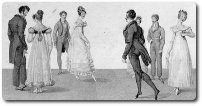 like dancers in a quadrille: a quadrille is a formal dance in which the dancers arroyo each other in reverse sides, run across and and so retreat again.
engine of regret: in its older sense, engine means device. Tess has been torturing herself with guilty feelings of every kind.
some worm-eaten Tuscan saint: the early Italian Renaissance of the thirteenth century had two centres in Tuscany: Siena and Florence. Peculiarly in Siena, the conventional painting was of Mary and the baby Jesus surrounded past various saints, all with haloes circular their heads. Such paintings were usually displayed on wood, and therefore subject to woodworm.
that little prisoner of the flesh: at this stage in the chapter, Hardy begins to use mock biblical and Volume of Common Prayer linguistic communication. Though the phrase is nowhere used in the Bible, information technology echoes several passages, such as Romans 7:22-24. In Ideal doctrine, the soul is seen equally prisoner of the trunk, and Hardy may be mocking that idealistic philosophy, too.
Aholah and Aholibah: These ii names were mentioned in Ezekiel 23:1-49. The actual passage, about 2 sisters who were condemned for prostituting themselves, was allegorical, applying to Samaria and Jerusalem (towns in the Middle-East), but Tess may have been taught the story as if the two girls were literal.
no salvation: views on baptism differed widely in Hardy's time. Hardy refers to the most extreme grade of the teaching, more typical of Roman Catholic theology, that baptism is necessary for salvation.
corner of hell: It is not clear how much of what Tess thinks about the possible fate of her baby is from her imagination, and how much accords with what she has been taught. In that location was widespread teaching about hell in Victorian times, and the fear of hell was one major motivator for skillful behaviour. Hell itself was typically associated with burning and torment. Whilst the New Testament speaks a good bargain about hell (due east.g.Matthew 25:30, Matthew 25:41), nowhere is it suggested this is the fate of babies or children.
arch-fiend....: Satan, the devil, who in popular representation deriving from medieval tradition, is seen every bit conveying a fork to toss souls into hell.
in the book of Genesis: A reference to Genesis 35:sixteen-19, where Rachel'due south second son is chosen Ben-Oni, meaning 'Son of sorrow', since his female parent died in childbirth. Later he was renamed Benjamin.
Prayer-Volume...parson: In Church of England liturgy, the clerk, a lay person appointed to exist the vicar's banana, would agree the Book of Common Prayer and the Bible open for the priest to read from. Tess is replicating the service equally much as she understands it, sprinkling the baby with the holy water and using the right Prayer Book formula for the baptism.
the Lord's Prayer: the prayer Jesus taught his disciples (Matthew 6:9-15 ). This most well-known of Christian prayers would have been taught to even the smallest children in Hardy'due south time.
manfully fighting against...: the actual words of the Book of Common Prayer baptismal service. By reporting the words, Hardy is able to innovate a annotation of mockery into them. This allows him both to avoid sentimentality and to undermine Anglican beliefs.
efficacy of this sacrament: baptism was seen every bit a sacrament, a ways of God'south grace, here conservancy. 'Efficacy' means that information technology actually worked. Hardy, of course, didn't believe it worked except at a psychological level.
stopt-diapason: on the organ, a loftier note that is stopped, or muffled.
delicate soldier and servant: once again, another mocking reference to the Prayer-Volume service of baptism, where the baptised person is encouraged to be both a soldier of Christ and a servant.
Social setting
Although the setting is Tess'southward home village, she still seems very much isolated from the other villagers. Many novelists might have taken the opportunity to depict village activities and personalities at this point, specially equally harvesting was very much a communal activeness. Hardy himself did this in earlier novels and short stories, but not here. Instead, he focuses on the mechanics of the harvesting.
Hardy briefly introduces some of the farm workers, but does not allow them to develop any characteristics or to become a 'rustic chorus' extensively commenting on life, as in some of his earlier novels such equally Under the Greenwood Tree. He also introduces the vicar, but again gives him no clear distinguishing features. His attitude regarding the baptism indicates that he may be liberal / associated with the Broad Church building, branch of Anglicanism. See Different religious approaches in Tess of the d'Urbervilles.
Babe mortality
The emotional high point of the chapter is obviously the baptism of Tess's dying baby. Hardy portrays Tess as ethereal, as seen through the optics of her younger siblings. The church is portrayed negatively, whilst Tess'southward purity, youth and angelic nature are emphasised.
However, at the same time, Hardy suggests that Tess was 'simply a passing thought' to the globe, which was basically indifferent to her guilt and grief. There is thus a tension betwixt such comments and his portrayal of her as someone meaning and primal to his narrative.
Regarding the death of the baby, it must be remembered infant mortality rates were still very loftier, and no-one in Hardy's readership would have marked this consequence as unusual or highly co-incidental. Notice there is no attempt to get medical help – it would take been too expensive, or there would have been none to go.
Time
The season moves to the summer, a yr later on Tess's venture to 'The Slopes'. The nine months between formulation and birth (September-June) suggests the infant is no more than 2 months quondam. Tess must at present exist 18.
Place
The setting is at present a subcontract in Marlott and the churchyard and vicarage. Hardy gives us no further details of the village.
Vocabulary
apotheosized: fabricated divine or god-similar
christen: baptise
comeliest: prettiest
concatenation: assemblage, variety of things linked together
ecclesiastic: churchman
extemporised: made up on the spot
immaculate: spotless
ordinance: sacrament, anniversary
scepticism: disbelief
sentient: conscious, sensitive to feeling
sexton: grave-digger and church caretaker
stubble: remains of stalk after corn has been cut
wain: large farm cart
Investigating chapter fourteen
- Hardy delays introducing Tess in this chapter.
- What does he open the chapter with?
- What is the effect of delaying Tess's appearance?
- Is the introduction of Tess's baby surprising?
- Examine words and phrases that suggest mechanisation.
- To what extent is Tess included in this language?
- How does Hardy distinguish betwixt the men and women labourers?
- How do the labourers relate to Tess?
- How does she relate to them?
- Pick out the colour words.
- Do y'all find any significance?
- Pick out words and phrases that suggest borders and marginalisation.
- In what way are these words continued with victimisation and entrapment?
- In ch. 10, Tess is described as 'on the momentary threshold of womanhood'. She is now xviii, an historic period when many girls did become married and have babies.
- Why exercise y'all think Hardy insists she is yet a daughter?
- How are Tess's younger siblings described?
- What does Hardy reach in the baptism scene?
- In what way is formal faith characterised in the chapter?
- What qualities does Tess display in the chapter?
- Hardy suggests Tess has 'a slight incautiousness of grapheme'.
- Is this fair?
- Is Hardy laughing a piffling at Tess when he mentions the marmalade jar at the terminate?
To immerse in or pour over water, in the name of God the Father, Son and Holy Spirit, to signify the washing abroad of away of sin. Baptism in Christian churches marks the acceptance of the baptised child or adult into the church.
Jesus describes hell as the place where Satan and his demons reside and the realm where unrepentant souls will go afterward the Last Judgement.
Name given to priest, usually those in charge of a parish.
Proper name given to priest, ordinarily those in charge of a parish.
Name originally given to disciples of Jesus by outsiders and gradually adopted by the Early Church.
Term applied to those who are not Christian, particularly followers of the classical religion of Greece and Rome and of the pre-Christian religions of Europe.
1. Instrument of execution used in the Roman Empire. 2. The means by which Jesus Christ was put to decease and therefore the primary symbol of the Christian organized religion, representing the way in which he is believed to take won forgiveness for humankind.
A 'testament' is a covenant or binding agreement and is a term used in the Bible of God'south human relationship with his people). The sacred writings of Judaism (the Hebrew Bible). These besides grade the first part of the Christian Bible.
Renaissance is literally 're-birth'. The term describes the movement, peculiarly in the 15th and 16th centuries originating from Italy, where new areas of art, verse, scholarship and architecture emerged.
The mother of Jesus. The Gospels state that Mary's pregnancy was brought almost past the Holy Spirit and not through a human human relationship; she is therefore known every bit the 'Virgin'.
The proper noun given to the homo believed by Christians to be the Son of God. Too given the title Christ, meaning 'all-powerful one' or Messiah. His life is recorded most fully in the Four Gospels.
In the New Testament the term is used of all Christians but gradually came to depict an especially holy person.
The book of prayers and church services offset put together by Thomas Cranmer, Archbishop of Canterbury in the fourth dimension of King Edward VI (1547-53) for common (ie. general) use in English churches.
1. Relating to Plato or his philosophy. 2. Describing a human relationship which is appreciating only not sexual.
The spirit which gives life to a homo; the role which lives on afterward death; a person's inner being (personality, intellect, emotions and will) which distinguishes them from animals.
A non-realistic genre of literature whereby characters or episodes systematically represent a certain conventionalities organization. Interpretation of allegory can involve two or more levels of meaning.
The immersion in or pouring over of h2o, in the proper noun of God the Begetter, Son and Holy Spirit, to signify the washing abroad of away of sin. Baptism in Christian churches marks the credence of the baptised child or adult into the church.
Member of a worldwide Christian church which traces its origins from St. Peter, 1 of Jesus' original disciples. It has a continuous history from primeval Christianity.
The study of God.
In the Bible, salvation is seen as God's commitment to save or rescue his people from sin (and other dangers) and to establish his kingdom.
Jesus describes hell as the identify where Satan and his demons reside and the realm where unrepentant souls will go afterward the Last Judgement.
A 'testament' is a covenant (bounden agreement), a term used in the Bible of God's relationship with his people. The New Testament is the 2nd function of the Christian Bible. Its name comes from the new covenant or human relationship with God.
The devil; the term 'Satan' actually means 'Enemy' and is often used to refer to the force of evil in the world.
Also known every bit Satan or Lucifer, the Bible depicts him as the chief of the fallen angels and demons, the arch enemy of God who mounts a significant, just ultimately futile, challenge to God's authority.
Belonging to the Middle Ages.
Jesus describes hell as the place where Satan and his demons reside and the realm where unrepentant souls volition go after the Concluding Judgement.
Girl of Laban, sister of Leah, wife of Jacob and mother of Joseph and Benjamin.
The 'Established' or state church of England, the result of a break with the Catholic church under Henry Viii and further developments in the reign of Elizabeth I.
A set class of a worship service in church, normally written downwardly. This includes set prayers and Bible readings for certain weeks of the twelvemonth.
Commonly used of a religious believer or believers who are not clergy, that is, have not been ordained.
1. A substitute, representative, or proxy. two. Title given to priest responsible for caring for a parish. In the Centre Ages many rectors (who had the right to the income from a parish church) appointed vicars to care for the parish in their identify.
The volume of prayers and church services first put together by Thomas Cranmer, Archbishop of Canterbury in the time of King Edward Half-dozen (1547-53) for mutual (ie. general) use in English language churches.
A person whose role is to comport out religious functions.
The immersion in or pouring over of water, in the name of God the Father, Son and Holy Spirit, to signify the washing away of away of sin. Baptism in Christian churches marks the acceptance of the baptised kid or adult into the church.
Advice, either aloud or in the center, with God.
The proper name given to the man believed by Christians to be the Son of God. Also given the title Christ, pregnant 'all-powerful one' or Messiah. His life is recorded most fully in the Four Gospels.
ane. Term meaning learner or follower. ii. Used in the New Testament in particularly of the twelve apostles of Jesus. three. Now applied more generally to all Christians.
Name originally given to disciples of Jesus by outsiders and gradually adopted by the Early Church.
The book of prayers and church services first put together by Thomas Cranmer, Archbishop of Canterbury in the time of King Edward 6 (1547-53) for mutual (ie. general) use in English churches.
1. An act of duty and devotion. ii. By extension, a religious ceremony offering obedience and worship to God.
The Anglican church is the 'Established' or state church of England, the result of a break with the Catholic church under Henry Viii and farther developments in the reign of Elizabeth I.
Religious anniversary which symbolises receiving an inward spiritual grace.
Undeserved favour. The Bible uses this term to describe God's gifts to human beings.
In the Bible, salvation is seen as God's commitment to save or rescue his people from sin (and other dangers) and to establish his kingdom.
i. A substitute, representative, or proxy. ii. Title given to priest responsible for caring for a parish. In the Middle Ages many rectors (who had the right to the income from a parish church) appointed vicars to care for the parish in their identify.
In faith, this means someone who is prepared to revise their theological views in line with modern thinking, as opposed to conservatives, who are prepared to defend traditional beliefs against modern or secular ones.
In the nineteenth century, the term given to that section of the Church of England that did not insist on a rigid adherence to conventionalities and practice as laid down in the Book of Mutual Prayer.
The Anglican church is the 'Established' or country church of England, the upshot of a break with the Catholic church nether Henry VIII and further developments in the reign of Elizabeth I.
Religious ceremony which symbolises receiving an inward spiritual grace.
Set in the fourth dimension of the judges, a story of the faith of a Moabite daughter and her sacrificial love for her Jewish female parent-in-police force. Descended from Ruth is King David, the ancestor of Christ the Messiah.
Big ideas: Women in the Bible
Source: https://crossref-it.info/textguide/tess-of-the-durbervilles/11/1319
0 Response to "Tess of the D'urbervilles Read Online Pdf"
Post a Comment